Category Archives: Photographic Art

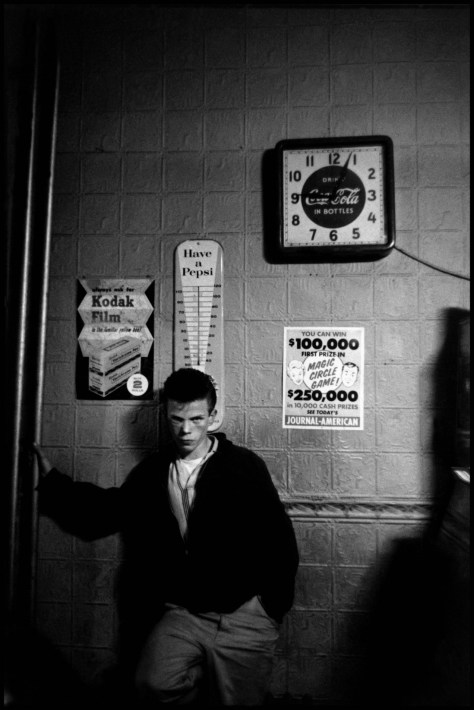
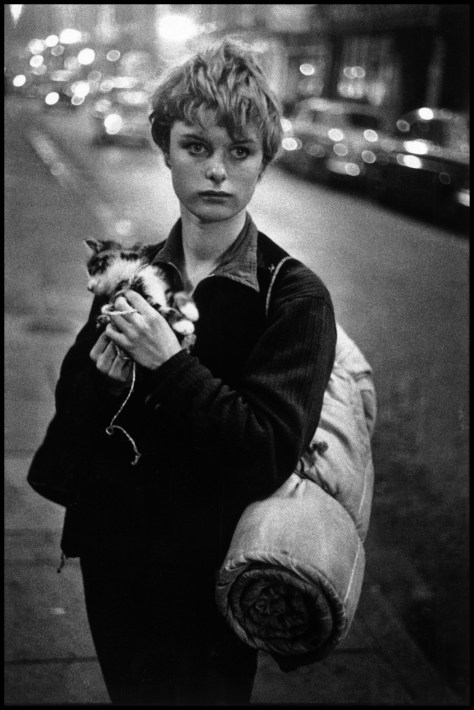
Bruce Davidson.

https://www.washingtonpost.com/news/in-sight/wp/2016/09/15/the-unforgettable-images-of-legendary-photographer-bruce-davidson/?hpid=hp_no-name_photo-story-b%3Ahomepage%2Fstory

Photographer Bruce Davidson was shooting scenes of urban poverty on East 100th Street in New York, when a woman asked him why he was there. When he said he was shooting images of the ghetto, she responded, “What you call a ghetto, I call my home.”

Davidson, a member of the Magnum Photos collective, worked hard to balance the dire situations that residents lived in with moments of beauty and resilience. It was also a common thread throughout his life’s work. No matter the situation, Davidson’s subjects maintained their inalienable right, as humans, to dignity. This is apparent in Davidson’s book, “Bruce Davidson” (Prestel, May 2016), a collection of his most important work including the civil rights era, the subway, a circus and a Brooklyn gang.

While Davidson could take a photo in an instant, reform came slowly. “[My work] doesn’t change anything overnight,” he said via email, “No matter how long I photographed on East 100th St., it wasn’t going to change that fast.”

And I wonder, where are they now? What happened to their lives?

@ Bruce Davidson/Magnum Photos

I found it in The Washington Post

😊   Pelle

imrs-1

imrs-2

imrs-3

Marc Riboud remembered

This will be the year , unfortunately, when many of the most talented left this life. Read more and learn about Marc Riboud.

This is from The New York Times.

Mr. Riboud’s career of more than 60 years carried him routinely to turbulent places throughout Asia and Africa in the 1950s and ’60s, but he may be best remembered for two photographs taken in the developed world.

The first, from 1953, is of a workman poised like an angel in overalls between a lattice of girders while painting the Eiffel Tower — one hand raising a paintbrush, one leg bent in a seemingly Chaplinesque attitude.

The second, from 1967, is of a young woman presenting a flower to a phalanx of bayonet-wielding members of the National Guard during an anti-Vietnam War demonstration at the Pentagon.

Both images were published in Life magazine during what is often called the golden age of photojournalism, an era Mr. Riboud exemplified.

http://www.nytimes.com/2016/09/01/world/europe/marc-riboud-photographer-dies.html?_r=0

More sport photos

This time from BBC, and a look into the history of amazing sport photos.

About the top image:

“Bob Martin’s photograph is so beautifully composed, so structured, that it is only afterward the details come into focus,” writes Buckland. “This is the Paralympics. The rules of swimming are almost identical to the regular Olympics but no prostheses are permitted. Torres has left his legs behind.”

http://www.bbc.com/culture/story/20160816-nearly-200-years-of-incredible-sporting-photos

😊  Pelle

Rio 2016: 25 of the most incredible Olympic photos so far

I just found these images in the Washington Post.

Sport is always a possibility for great shots. Look at these and you understand. The very first image is touring the world right now.

Usain Bolt of Jamaica competes in a heat of the men’s 100-meter semifinals.                                         © Cameron Spencer/Getty Images

https://www.washingtonpost.com/sports/olympics/rio-2016-25-of-the-most-incredible-olympic-photos-so-far/2016/08/16/65add3f2-5f34-11e6-af8e-54aa2e849447_gallery.html?hpid=hp_no-name_photo-story-b%3Ahomepage%2Fstory

It would be great to have the opportunity once to cover an event this size. Color, speed, expression. It has everything. Happiness and sorrow, not to forget. And The Olympics is not over yet…

😊   Pelle

Rotterdam next

Years ago I saw one of his exhibitions in Milan. Great images, also in size, and a great show! Now I certainly like to go to Rotterdam.

https://www.theguardian.com/fashion/2016/aug/07/peter-lindbergh-i-dont-retouch-anything-a-different-vision-on-fashion-photography

Peter Lindbergh: A Different Vision on Fashion Photography is at the Kunsthal Rotterdam from 10 September 2016-12 February 2017 (kunsthal.nl)

“He has such strong themes. You can immediately say, ‘That’s a Lindbergh image’ because of the timelessness of the portraits, without make-up, without hair. They never date.”

Lindbergh does what he does. And as long as you don’t try to retouch what he does, he is happy.

Magazines have to sign a contract agreeing not to do any retouching, otherwise, he says, it happens. “The cosmetic companies have everyone brainwashed. I don’t retouch anything. ‘Oh, but she looks tired!’ they say. So what if she looks tired? Tired and beautiful.”

There is more interesting things to read in the article. I found it in The Guardian.

(The above image was cropped by the Word Press app.)

😊 Pelle

The World from Above

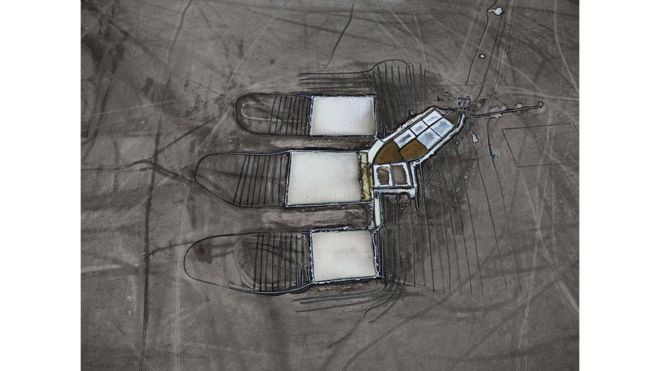
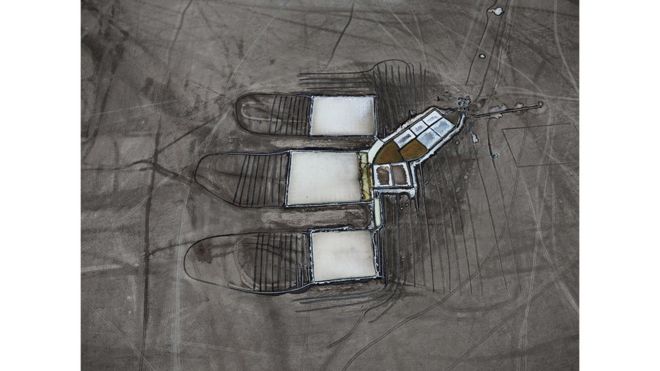
I am not much of a drone man myself, but well handeled you can make wunderful images with them. Like these.

The winners of this year’s aerial photography competition run by online site Dronestagram have been announced.

The winning pictures taken using drone cameras were selected from thousands of entries by the judges, including National Geographic Deputy Director Patrick Witty and Emanuela Ascoli, photo editor of National Geographic, France.

Todd Kennedy was on his honeymoon when he took this drone shot of Cable Beach, Western Australia. He said: “When we arrived in Broome, we booked a sunset camel tour which was a beautiful experience and a great opportunity to get a new addition to a series of shadow images I have been collecting since entering into drone photography.”

http://www.bbc.com/news/in-pictures-36733401

Read about it in BBC.

😀 Pelle

Once upon a time

Take a look at these wunderful images in the article. Read the texts and you understand that this is no ordinary b/w prints that are tinted. Amazing work! I read this in The Guardian.

Text for the above image.

https://www.theguardian.com/artanddesign/gallery/2016/jul/04/photochromes-swiss-camera-museum-hans-jakob-schmid-in-pictures

Remember that photographers had to use b/w or color film years ago. Or just b/w if it was many years ago. Today it is easier with everything built into a camera.

3780-1

Finally: Now I have seen the question, again. Is photography art? In my opinion YES it could be, but not every photograph is. Far from!

😀 Pelle

Fan Who?

I just read that the photographer Fan Ho has passed away at the age of 85. I did n´t know about him but I like to share what I just learned with you. His work is fantastic! It is not difficult to understand that he was called the Bresson of the East. I first learned about him in an article in http://www.dpreview.com. The top link. The second link is to his homepage. Really colorful w/w images. It really shows that good photography has no age. It is timeless.

Please excuse my little joke in the headline, but I had never heard of him before.

Images © Fan Ho

http://www.dpreview.com/news/6315115603/remembering-fan-ho-1937-2016/1

http://www.fanhophotography.com/index.html

2014-08-29-fan-ho-03

😊 Pelle

Sad and/but beautiful

After just returning home from 10 days in Kenya, these images are very sad to see. But they are also very beautiful. But of course it would be more beautiful if the animals could be seen in these places live. See and read more on BBC.

Nick Brandt built lifesized panels depicting Africa’s great creatures and placed them in scenes where they used to roam. The resulting photographs serve as a potent reminder of what poaching and climate change put at stake. © Nick Brandt.

http://www.theguardian.com/artanddesign/gallery/2016/apr/05/nick-brandt-inherit-the-dust-africa

4000

3200

More water

Seconds after looking at those wunderful waves, here is more water that I just discovered. Through another photographers lens and they look so different. But just as amazing. I think. See the slide show for more images.

http://www.nytimes.com/2015/03/27/magazine/toshio-shibatas-mesmerizing-photographs-of-water.html?_r=0#

The Japanese photographer Toshio Shibata is fascinated by water — in particular, the way it interacts with man-made structures. For the later half of his almost-40-year career in photography, he has explored this relationship in novel ways, hiding horizon lines and taking the perspective of the water itself with his camera, visually evoking its rushing sound.

Each of Shibata’s photographs depicts a different kind of human intervention in the natural movement of water, many of them the kind of mundane engineering projects we rarely think about. “To me,” Jacob Cartwright of Laurence Miller Gallery, which recently opened a show of Shibata’s work, said via email, “the essence of his work is taking ubiquitous yet frequently disregarded parts of our contemporary landscape and transforming them into something visually uncanny through formal invention.”