Everything is not digital these days. Another place, but the same time. 😊 Pelle
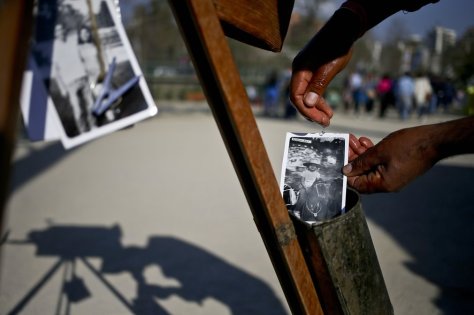
Luis Maldonado is the last remaining photographer in the main square of the Chilean capital still using a wooden box camera.

Everything is not digital these days. Another place, but the same time. 😊 Pelle
Luis Maldonado is the last remaining photographer in the main square of the Chilean capital still using a wooden box camera.

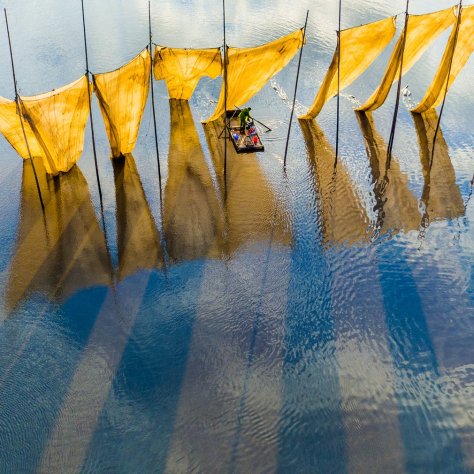
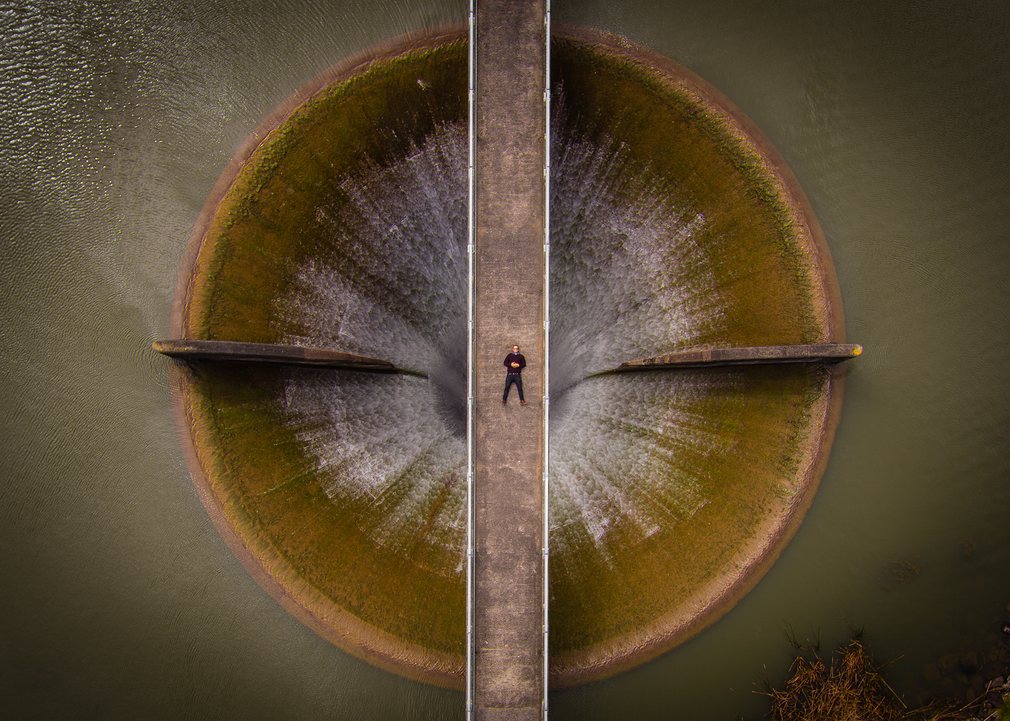
Here is another set of drone photography. One perhaps considered as a selfie. Nature from above is often very graphical and beautiful. Just look at these images. Hmmm, just thinking, how many are falling from the sky?
Aerial photography platform SkyPixel received 27,000 entries to its 2016 competition. Here are the winning shots plus some of The Guardians favourites. SkyPixel’s competition was open to both professional and amateur photographers and was split into three categories: Beauty, 360, and Drones in Use.
Photograph: Hanbing Wang/SkyPixel

Photograph: Ge Zheng/Ge Zheng/SkyPixel

Photograph: Brendon Dixon/SkyPixel

Photograph: SkyPixel
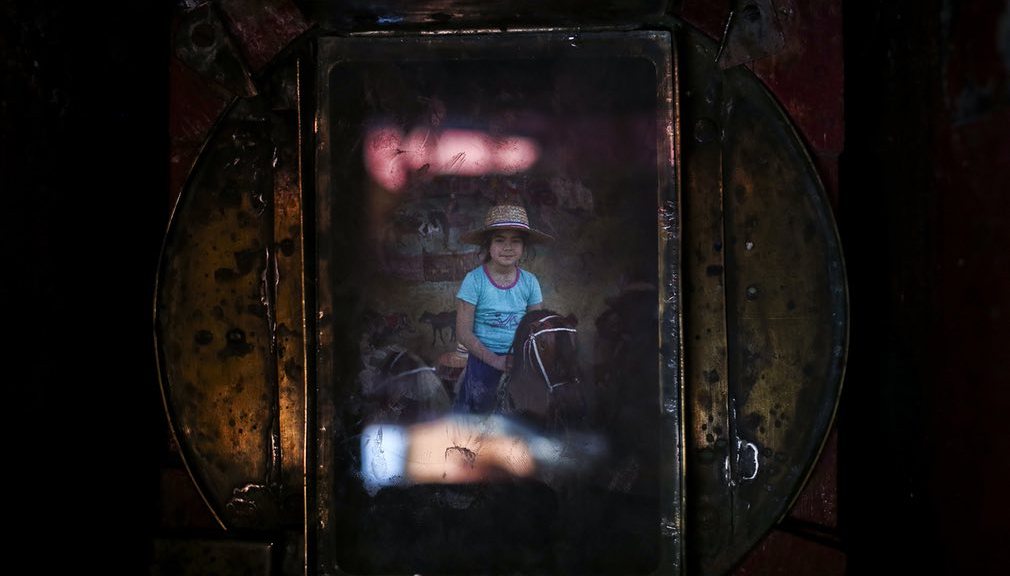
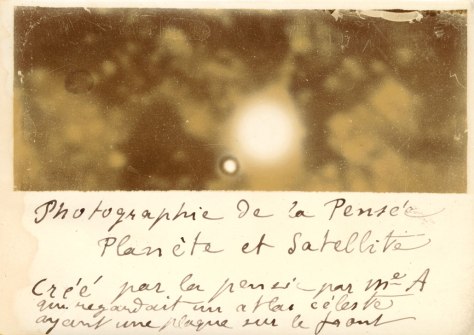
This is a very interesting article about people who thought they could photograph thoughts. Whatever you think, and I, the images with the old hand writing are beautiful. It is artistic. Perhaps even art…?
http://www.bbc.com/future/story/20170116-the-man-who-tried-to-photograph-thoughts-and-dreams
Images courtesy of The Institute for Frontier Areas of Psychology and Mental Health (IGPP) in Germany. Article by Josh Gabbatiss in BBC.
😊 Pelle


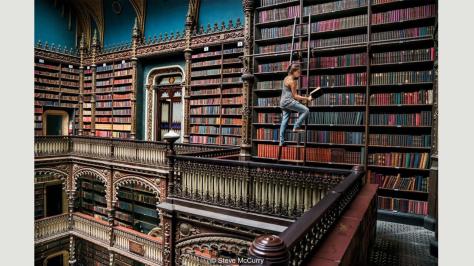
People do read, everywhere in the world. Notice that none of the persons in these images are reading on a phone or a computer. I like that, and I like reading. I´d rather read the book instead of seeing a movie from the book. Then I am doing the interpretations and I am setting the cast. My imagination is working for me.
A new book brings together Steve McCurry’s photos of readers, spanning 30 countries. From a steelworks in Serbia to a classroom in Kashmir, they reveal the power of the printed word.


Without the word, without the writing of books, there is no history, there is no concept of humanity.
Back in 1930, Hesse argued that “We need not fear a future elimination of the book. On the contrary, the more that certain needs for entertainment and education are satisfied through other inventions, the more the book will win back in dignity and authority. For even the most childish intoxication with progress will soon be forced to recognise that writing and books have a function that is eternal.”
Many years ago I was given a book with the mentioned André Kertész reading images, and that book is still one of my favorites. Thank you Bruno!
I found the article at BBC. All images are © Steve McCurry.

This book came out in 1975, and I understand that an original in a larger format was released in 1971.
Look at this amazing story about a farmer that documented snow flakes with a camera. Not just any camera! Amazing, isn´t it?
More than 5300 different flakes. A warm and interesting story about photography.
In 1904, Wilson Bentley, who developed an apparatus to photograph snowflakes in the 1880s, beseeched the Smithsonian to care for his collection. – http://wapo.st/2jvEKAa
This Vermont farmer’s snowflake photos were a lifelong passion.
I found it in The Washington Post.
😊 Pelle
The 15 finalists of this year’s Art of Building architectural photography competition have been selected from thousands of entries. Here ( BBC ) we present the photos along with a comment from each photographer.
http://www.bbc.com/news/in-pictures-38301001
I picked these up at BBC. I like the one with ladders especially. That is also an art of building a building. 😉
About the above image: Jonathan Walland: “This is part of a series of photographs demonstrating how the absence of light can be used to divert the attention of the observer towards what the photographer intended to highlight.”
😊

Michele Palazzo: “New York City’s iconic Flatiron building emerges from the blizzard, like the bow of a giant ship ploughing through the wind and the snow. Taken during the historic coastal storm, Jonas, on 23 January 2016, the photograph went viral during the aftermath of the storm.”

Enrique Gimenez-Velilla: “This photo seeks to pay homage to all the clever unknown workers that still build and maintain built infrastructure in the developing world.”
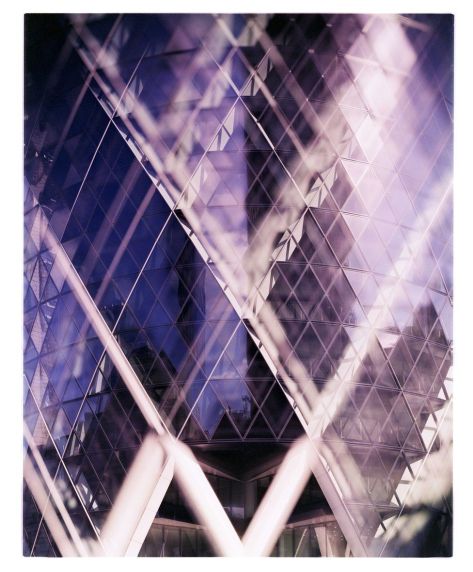
James Tarry: “This series is about looking past imperfections and ‘incorrect’ architectural photography techniques. The expired Kodak Ektachrome was developed in the ‘wrong’ chemicals to produce these big slabs of often other-worldly colour. These are flawed and hopefully challenging, just like some of the buildings themselves.”
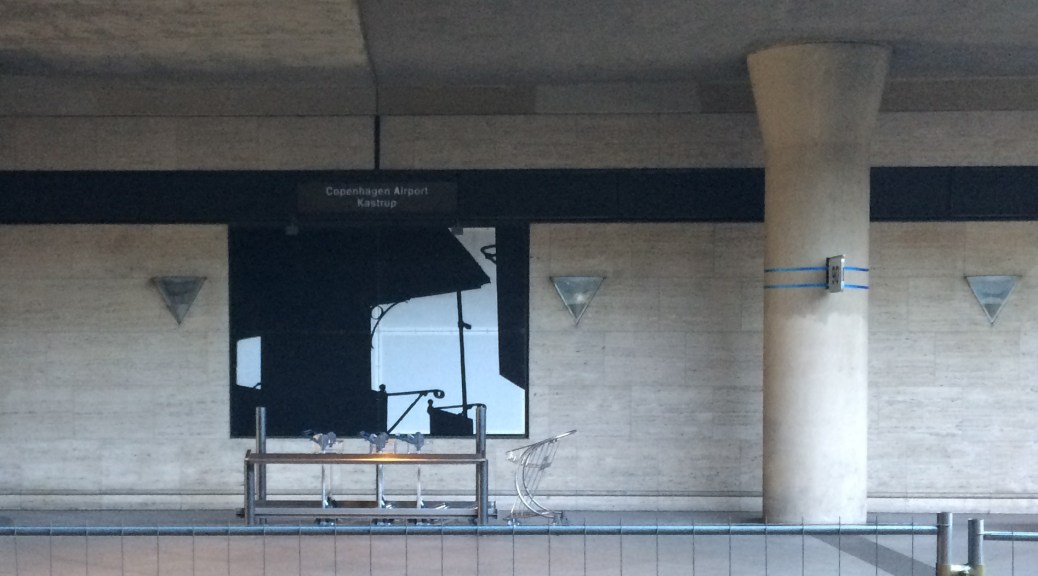
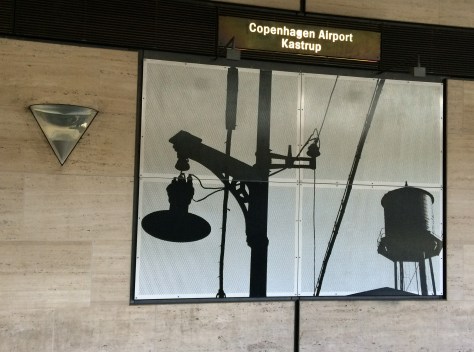
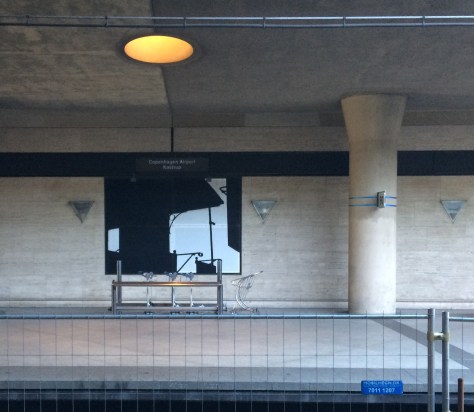
At the Copenhagen Airport, Kastrup, you will find this fine exhibition. At the railway station downstairs.
If you go there, and got the time, I´ like to recommend it. The images are great and the idea to put them there is just as great.
The Danish photographers name is Keld Helmer-Pedersen.
😊 Pelle


Whao!!! Amazing and beautiful. The best i have seen for a very long time.
I found it, to my happiness, in The Washington Post. See the whole series with the link.
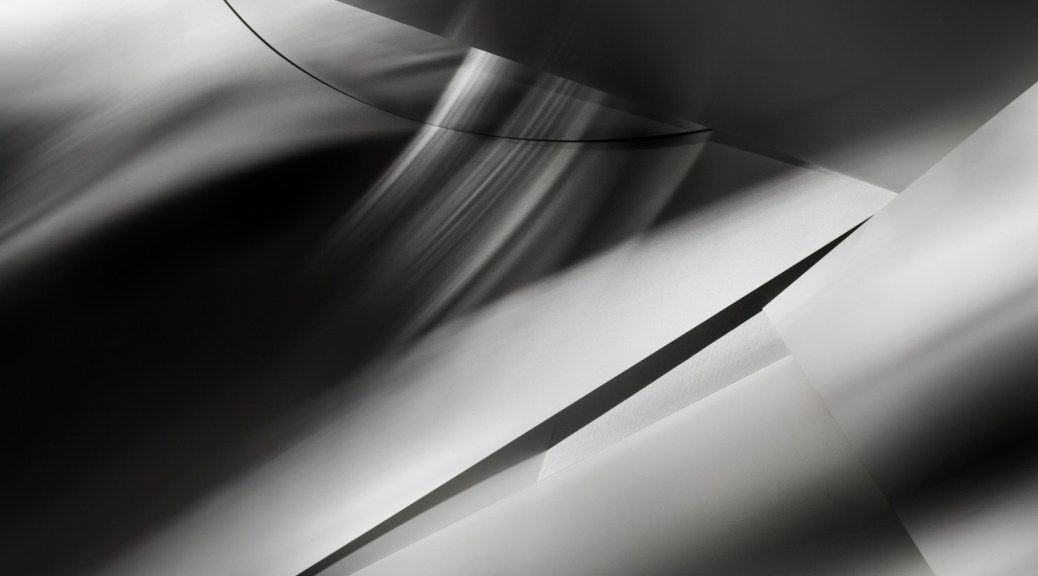
“Counterpoint #11.” (Scott F. Smith) is the image above.
There is no guiding force in Scott F. Smith‘s series, “Paper,” except instinct. Beginning with a pristine sheet, Smith makes a series of clean slices. It’s an engaging process of delicate manipulations: pulling the paper, carving it, and modulating light to reveal its inner corridors.
In addition to his studio lighting setup, Smith has a collection of tiny flashlights that he uses to target nooks in his pieces. He uses them to experiment on various types of paper.
Smith is fascinated with the idea of using simple materials as a conduit for expressing different qualities of light. It started when he was a photography student and was given a “white on white” assignment — shooting a white object on a white background — to demonstrate that a huge range of tones could be produced by harnessing light. Smith has since also studied light’s interaction with stone and ice.
Having worked for years printing photographs in darkrooms before going digital, part of this project is connected to his nostalgia for the manual parts of the process. “The draw is just the physical connection,” he said, “In the old days when you had a print in the developer, or you try to massage highlights to get details. … It’s a way to stay in touch with physical, tactile engagement with materials.”
The paper in this project, though, is simply a means to an end. Although he hasn’t thrown any of his paper pieces out (“I’m a little attached,” he said), he primarily hangs on to them to show viewers what his pieces are made of. His main goal is to create abstract images that remind the viewers of other objects or emotions. The most important thing in Smith’s eyes is not the paper, but the resulting photograph.


😊 Pelle
I am afraid I will, and I am very sorry for that. If you live close enough you SHOULD go there. Paul Biddle is a very good friend of mine, and one of the best photographers that I know. And know of. He has the gift to always creating interesting and surprising images from his imagination.
Photography is also, among many other things, capturing dreams. Seeing the inner vision and to let that come out. Paul is one of the best. I am sure that he and his colleagues will create a wonderful exhibition that will open up your fantasy as well. Go see!

😊 Pelle
Or perhaps human patterns. Any way it is very interesting what a curious and sensitive eye can see from above. Another reason to go to London.
http://www.bbc.com/news/in-pictures-37347873
Canadian photographer Edward Burtynsky is best known for his large-scale images of landscapes altered by industry. An exhibition of his new work Salt Pans, a series photographed from the air above the Little Rann of Kutch in Gujarat, India, is on show in London.
😊 Pelle

Often from an aerial perspective Burtynsky’s pictures have a painterly, abstract quality. This shot, taken in 2012, shows the Thjorsa River in Southern Region, Iceland.


The project documents a disappearing landscape. The geometric patterns detail the network of wells and vehicle tracks made during the extraction of hundreds of tonnes of salt from the area.